The climate conditions of northern Vietnam, characterized by clear seasonal variations, wide temperature fluctuations, and high humidity, impose specific requirements on large-scale livestock farming projects. Therefore, the effectiveness of high-tech farm models depends not only on the application of advanced equipment, but also on how well farm design and technical systems are adapted to animal species, stocking density, and actual weather conditions.
Northern climate conditions and their impact on different livestock groups
In large-scale livestock farming, climate and environmental conditions directly affect each animal group. Northern Vietnam experiences distinct seasonal patterns, large temperature differences, and prolonged high humidity, while industrial pig and poultry farms are densely concentrated in the region. This combination means that environmental control and design requirements cannot be applied uniformly across all livestock types.
For large-scale pig farms, long operating periods under high temperature and humidity conditions increase the generation of emissions, odors, and airborne microbial loads. This places significant pressure on ventilation systems, exhaust air treatment, and overall barn environmental control, directly affecting animal health and operational stability.
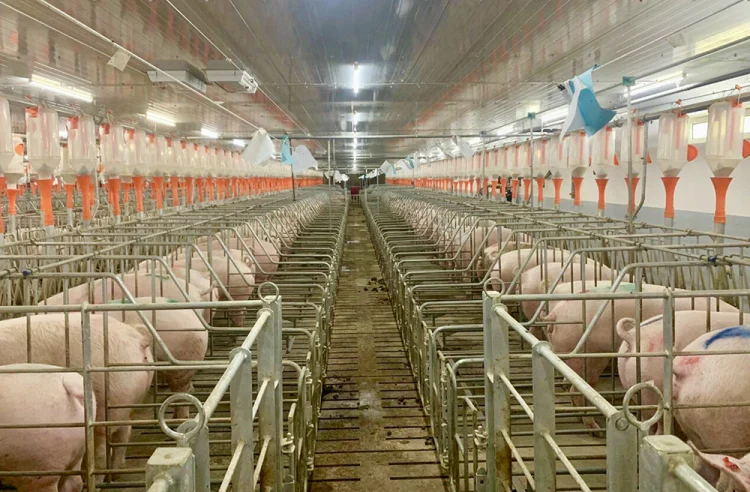
In contrast, in high-density poultry farms, seasonal temperature swings and high humidity significantly impact heat distribution, airflow velocity, and thermal stress levels. Small deviations in microclimate control can quickly reduce productivity or increase mortality on a large scale.
Operational suitability of different high-tech farm models
Closed-house model
For industrial-scale farms, the closed house model is a necessary condition for effective environmental and disease control. However, the technical configuration of a closed house must be selected based on the specific livestock type and operational requirements, rather than applying a single standardized model.
For poultry farms, ventilation systems must be designed to control air velocity according to each growth stage, avoiding heat shock and prolonged stress. For pig farms, even with a similar closed house structure, ventilation systems must prioritize air exchange capacity and odor treatment, as emissions and ammonia loads are significantly higher.
In Northern Vietnam, the main advantage of closed houses is the ability to isolate livestock from external weather and pathogens. However, the downside is also significant: high capital costs and heavy reliance on electricity, control centers, and the technical workforce.

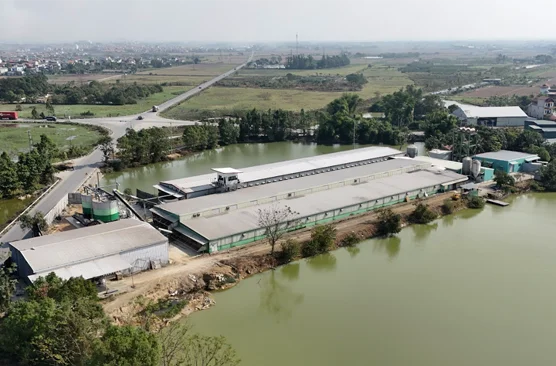
Closed egg-laying poultry house model at DELCO Agriculture
Semi-closed house model
In large-scale farm engineering practice, the concept of a semi-closed housing model is rarely applied accurately. Most models described as semi-closed in northern Vietnam are in fact improved open houses, or closed houses that are not operated according to proper standards.
Under the complex disease conditions typical of northern Vietnam, this model presents significant risks. Incomplete control of wild birds, insects, and external airflow increases the risk of cross-contamination, particularly for diseases such as avian influenza or ASF. In this context, a more appropriate approach is not semi-closed housing, but fully closed housing with flexible operation, allowing ventilation adjustments according to growth stages and weather conditions.
Free-range / Free-cage model
Free-range farming is still applied in some large-scale poultry farms, especially for products positioned around quality or animal welfare. However, as scale increases, this model requires a different operational and environmental control approach compared to closed housing systems.
Under the climate conditions of northern Vietnam, free-range farming is highly dependent on outdoor weather, making control of temperature, humidity, and biosecurity more complex, particularly during prolonged hot periods or seasonal transitions. As a result, large-scale free-range farms typically need additional technical support solutions and careful planning to maintain operational stability and reduce long-term risks.
Operational constraints across all high-tech farm models
High humidity as a limitation for Cooling Pad systems
In Northern Vietnam, the performance of cooling pad systems is heavily affected by seasonal humidity. During periods of high humidity, outdoor moisture levels rise significantly, reducing the efficiency of evaporative cooling. Operating cooling pads based solely on temperature thresholds during this time can cause rapid humidity buildup in the barn, degrading floor conditions and air quality.
Under these conditions, effective cooling does not come from increasing cooling pad capacity, but from applying transition ventilation strategies combined with humidity-based control logic, rather than temperature-only control. This approach helps maintain a more stable indoor environment during adverse weather and reflects the maturity of environmental control and automation systems in modern livestock farming.
Biosecurity as a core requirement
In high-tech livestock farming, the focus is not just on scaling up production but on maintaining a stable rearing environment to ensure animal health and uniform performance. In the North, where disease risks are always present, biosecurity must be seen as an integrated part of operations, not just a manual checklist.
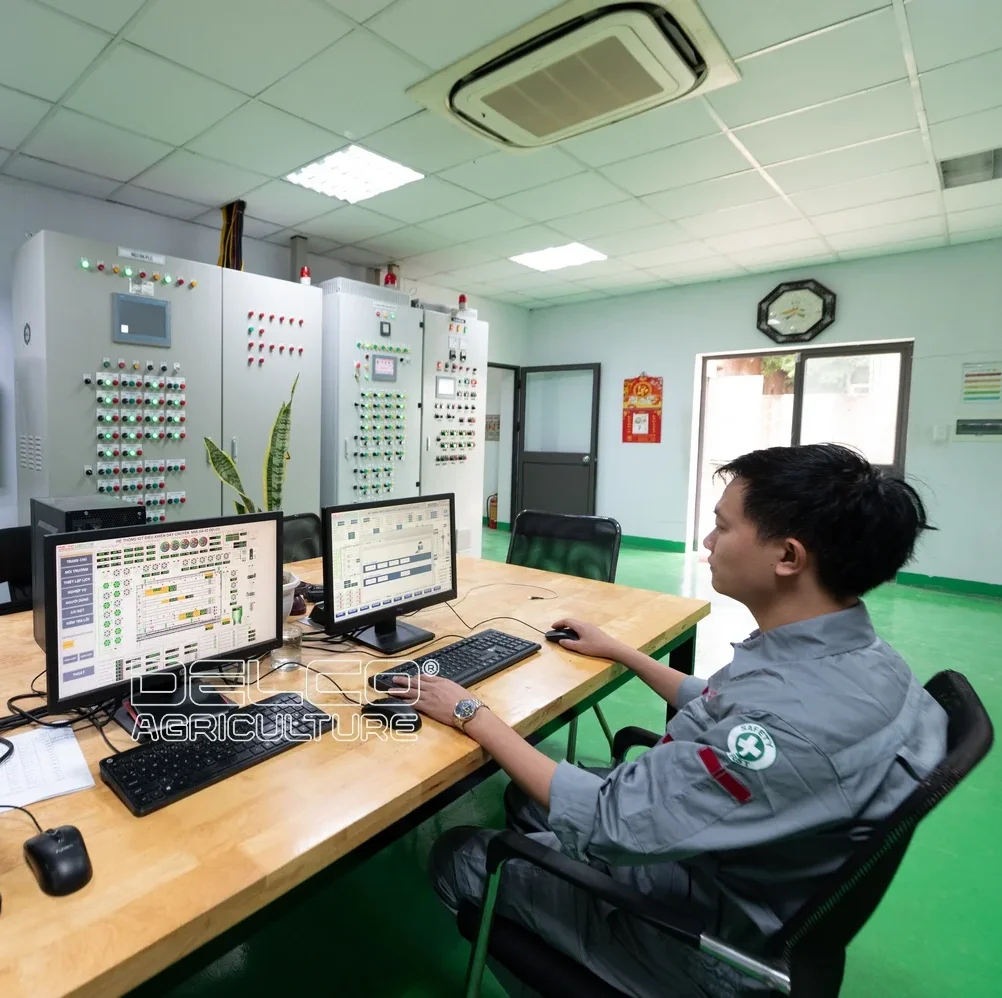
Large-scale farms typically implement multiple layers of biosecurity control, including automated disinfection systems, controlled access for vehicles and personnel, clearly defined internal traffic flows, and closed feed supply systems using silos to minimize external exposure. These measures significantly reduce infection risks and help stabilize operations as herd size increases.
As farm scale grows, biosecurity effectiveness increasingly depends on system integration. Weak control points can directly impact herd health and overall farm economics.
Energy reliability and risk mitigation
In closed-house systems with high stocking density, electricity is a critical factor in maintaining stable environmental conditions. Under northern Vietnam’s climate, especially during heat waves, even short power interruptions can severely affect animal welfare if backup systems do not respond immediately.
As a result, high-tech farms are typically designed with multiple layers of power redundancy, supported by monitoring and remote alert systems to enable rapid response. Some models also integrate biogas or solar power systems, which support waste treatment, reduce energy costs, and enhance long-term operational resilience.
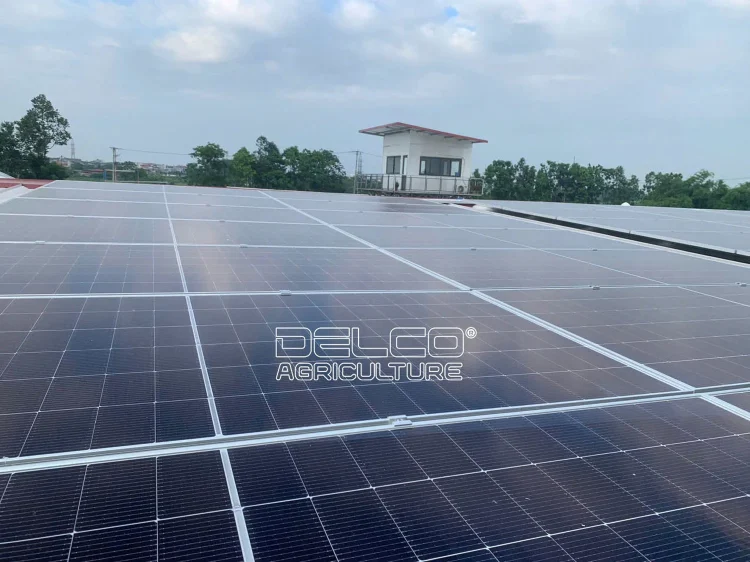
Solar energy system supplying power to farm operations at DELCO Agriculture
Lessons from on-site implementation experience
In practice, high-tech livestock farms do not operate under a single fixed formula. Each project must be tailored to the specific animal type, site conditions, climate characteristics, and local disease risks.
Operational suitability does not come from installing the most advanced equipment, but from understanding system limitations and designing farms that remain stable under unfavorable conditions. Effective solutions usually begin with a comprehensive assessment of real-world conditions, rather than applying a predefined model in a rigid manner.
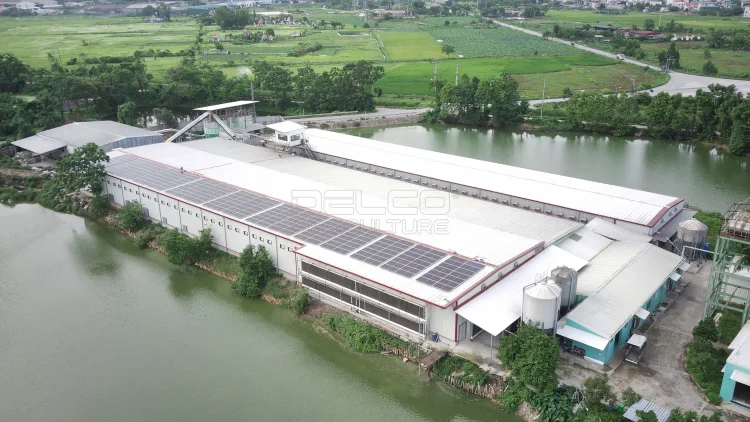
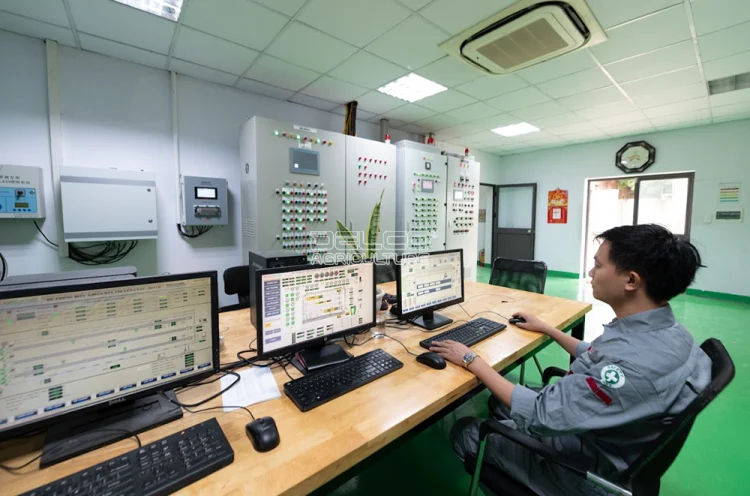
From a technical and operational perspective, DELCO approaches high-tech farm projects by designing holistic models tailored to real climate, environmental, and operational conditions—balancing energy and biosecurity factors with the goal of long-term risk reduction rather than short-term optimization.
See also: High-tech farming solutions by DELCO
See also: Conditions for effectively implementing closed-loop circular farm models in Northern Vietnam
See also: Delco Farm: All farming systems are automatically managed by software